
The Glorious History of Phuckery: From Olympus to the University
The story of Phuckery is not a modern invention—it is a continuation of a noble and mischievous lineage that began in Ancient Greece, the birthplace of both civilization and irreverence. Long before lecture halls and diplomas, the gods and mortals of Olympus perfected the art of clever rebellion, refined indulgence, and strategic chaos. What we now recognize as Phuckery was once the unspoken force that shaped philosophy, politics, and passion in the ancient world.
The Birth of Divine Mischief
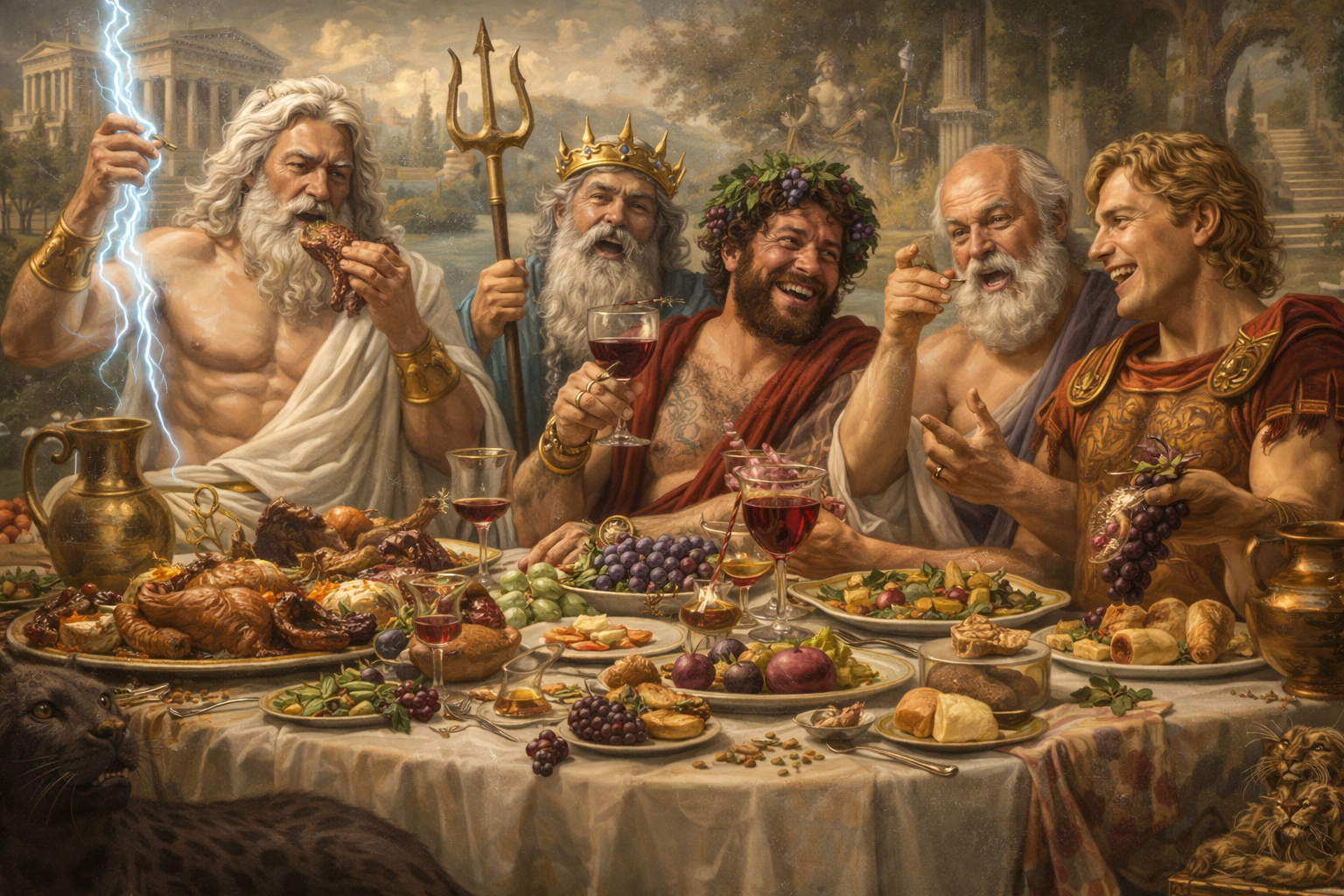
In the beginning, there was Zeus—the original dean of divine disruption. Known as the master of thunder and scandal, Zeus rarely followed the rules he himself proclaimed. His endless escapades and shapeshifting deceptions gave birth to the earliest case studies in what we now call Advanced Phuckery. His brother Poseidon mastered dramatic flair, wielding tempests not for necessity but for theatrical impact. Hermes, the messenger god, was perhaps the first valedictorian of Phuckery Studies—quick-witted, charming, and unapologetically bold. He invented lies, diplomacy, and commerce all in one go.
Then there was Dionysus, the god of wine and ecstatic abandon, who formalized the social curriculum of pleasure, performance, and rebellion. His festivals—the Dionysia—were equal parts symposium, theatre, and mayhem. Philosophers like Plato and Aristotle may have written the syllabi for reason, but Dionysus taught Greece to question authority through laughter, satire, and a good vintage.
The Greeks called it parrhesia—the art of speaking freely and courageously. Today, we call it Phuckery: the ability to challenge norms with wit, disrupt systems with intention, and do it all while wearing the metaphorical laurel of confidence.
The Age of Intellectual Phuckery
By the time Socrates appeared, the practice had matured. Socrates was a professional irritant—his method of questioning everything and everyone was nothing less than academic phuckery disguised as philosophy. He cornered Athens’ elite into revealing their ignorance, all while pretending to know nothing himself. Plato followed suit, turning conversations into elaborate performances of logic and irony.
Diogenes of Sinope, however, took Phuckery to an art form. Living in a barrel, heckling the powerful, and carrying a lantern in daylight to “find an honest man,” Diogenes embodied the defiant spirit of the discipline. He once told Alexander the Great to “stand out of my sunlight,” a line that still echoes in the lecture halls of the University of Phuckery as a model of unbothered brilliance.
Even the dramatists were in on it. Aristophanes mocked politicians and philosophers alike, his plays proving that comedy was the purest form of resistance. The stage became a classroom for those who understood that humour could be sharper than any sword.
The Fall, and the Quiet Persistence
When Rome rose, Phuckery migrated—its principles embedded in rhetoric, satire, and spectacle. The emperors copied Greek grandeur, but the philosophers and playwrights kept the true flame alive: the belief that wit could outlast empire. Through centuries of silence, whispers of Hellenic Phuckery survived in libraries, taverns, and salons, waiting for their renaissance.
The Revival of the Discipline
And now, after millennia, two modern Greeks—Dean Vlad X and Chancellor Eleni X—have resurrected this proud and playful tradition. Through the founding of the University of Phuckery, they have restored Greece’s most underappreciated export: the intellectual, cultural, and emotional art of disruption.
Dean Vlad X, custodian of legacy and provocateur of progress, leads the institution with the same energy Hermes once used to outsmart the Olympians. His doctrine is simple: wit is the highest form of intelligence, and irreverence, when done with grace, is an act of truth. Chancellor Eleni X, the architect of order in the chaos, ensures that this grand experiment balances ancient wisdom with modern relevance. Together, they have built a university where courage, humour, and intellect converge into a modern symposium of enlightened rebellion.
The Curriculum of the Bold
The University’s offerings are structured in the great academic tradition but laced with the audacity of their ancestors. Students begin with the Diploma in Basic Phuckery, learning the foundations of confident self-expression and playful defiance. They then progress to the Bachelor of Advanced Phuckery, mastering charm, improvisation, and strategic nonconformity. The Master of Profound Phuckery introduces the philosophy of purpose-driven disruption—where rebellion serves progress. And finally, the coveted Doctorate of Supreme Phuckery crowns those who embody the spirit of the ancients: visionary thinkers who create, question, and challenge with fearless brilliance.
For those who have already lived a life rich in irreverence, the Honourary Degree of Phuckery celebrates their contribution to keeping this timeless flame alive.
The Legacy Continues
What began as myth has now evolved into a movement. The University of Phuckery stands as a sanctuary for those who believe that intelligence should never be dull, that rules are meant to be examined, and that laughter is the sound of true enlightenment.
Dean Vlad X and Chancellor Eleni X have proven that the Greeks did not just invent philosophy, democracy, and theatre—they invented the art of beautiful chaos. Through their visionary revival, the lineage of Phuckery continues: bold, brilliant, and unmistakably Greek.
In the halls of this fine university, the echo of Olympus still lingers—reminding all who enter that to live well, think deeply, and laugh often is not rebellion. It is tradition.