
A Brief History of Parody: From Plato to Memes
From the Desk of Dean Vlad X
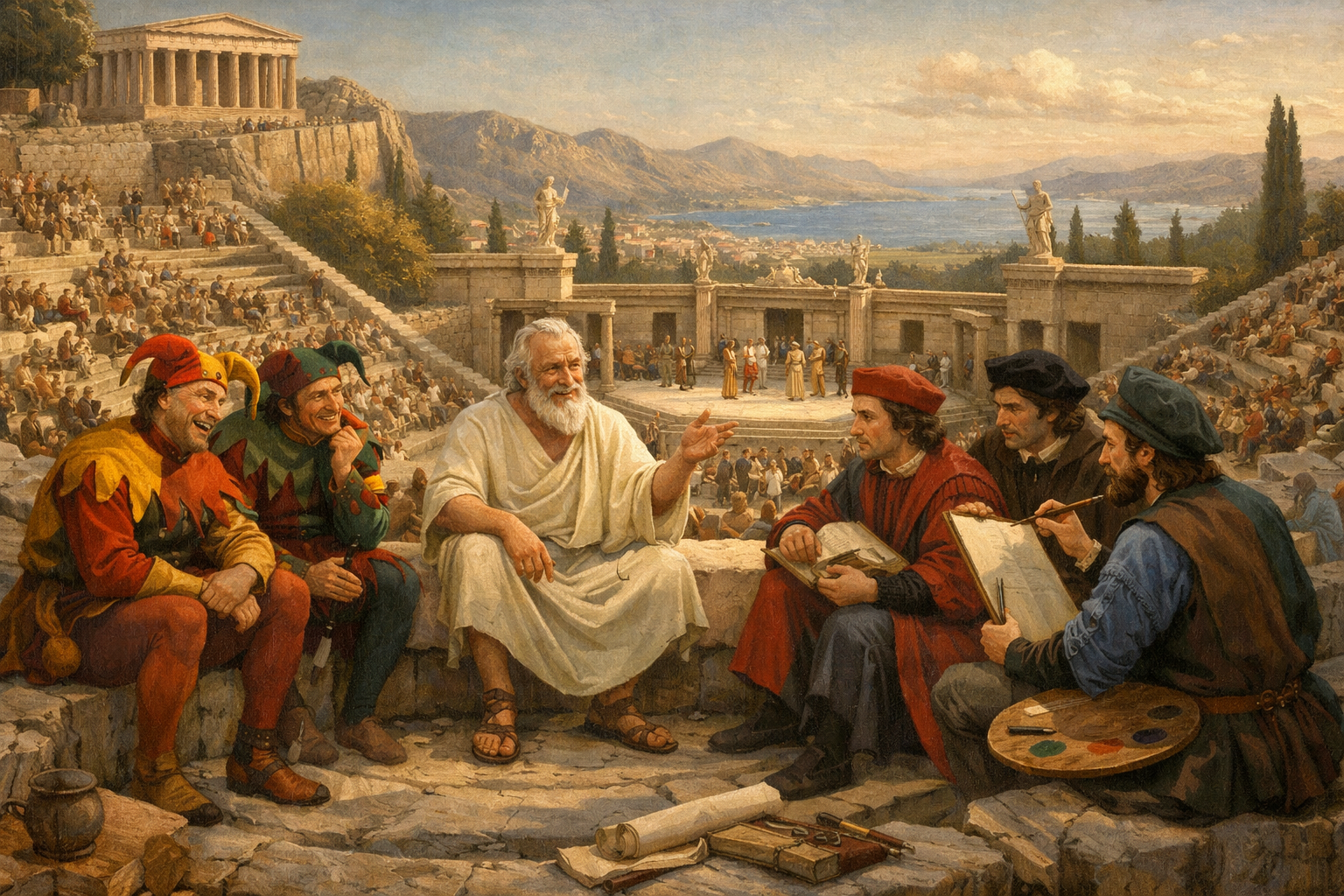
A Timeless Tradition of Mockery
If you think memes invented parody, you might be new here. Parody is as old as thought itself — a tool for thinkers who understand that the best way to challenge power is with a well-placed laugh.
From Plato’s dialogues to today’s digital feeds, satire has always been society’s favourite form of resistance. And, at the University of Phuckery, it remains our core academic discipline.
The Greek Genesis
Parody was born in the ancient amphitheatres of Athens. Playwrights like Aristophanes filled audiences with laughter while delivering sharp political critique. It was entertainment that educated — the original “edutainment,” long before webinars dulled the concept.
Learn more about these ancient innovators in our History of Phuckery.
The Medieval and Renaissance Remix
As centuries passed, parody went underground — disguised as jesters and poets. It resurfaced in the Renaissance, when artists and playwrights smuggled satire past the censors by cloaking truth in laughter.
Think of it as the ancient version of “subtweeting,” except with frescos and feather quills.
The Modern Meme Machine
Fast forward to the digital age: phuckery has gone global. Memes, TikToks, and parodic news sites now carry the same purpose once held by philosophers — to question, expose, and entertain.
Phuckery is alive and well, thriving wherever absurdity needs a spotlight.
Explore the science of this laughter in The Psychology of Satire — proof that humour sharpens intellect, not dulls it.
Why Parody Matters
In an age of overinformation, parody simplifies truth. It helps us cope, connect, and stay curious. When used with compassion, it reminds us that laughter is not denial — it is perspective.
How to Participate
Anyone can join this lineage. Start by gifting a Diploma in Basic Phuckery to a friend who refuses to take themselves too seriously. It is not just a certificate; it is a cultural contribution.
For full transparency (and fine legal humour), review our Terms and Conditions before becoming a scholar of satire.